- Noah Jacobs Blog
- Posts
- On Advice

2026.02.01
CXXXVII
[Opinions are Like…; Training From a Position You'll Never Get To; Teaching a One Stripe White Belt Omoplata; The Bad Doctor; Blood Drenched Advice; 20 Questions]
Thesis: It’s really easy to give bad advice and hard to give good advice.
[Opinions Are Like…]
The more experienced I get, the less willing I am to take advice from people.
3 years ago, that sentence would have been hard for me to write. I’d be afraid of being arrogant or having a closed mind.
Now, I think it's really fair, though. Most advice is cheap--literally anyone can give you advice. Not only does it cost nothing to give advice, it also feels good to give advice… even when it’s entirely wrong!
That doesn’t mean all advice is bad, at all. Some advice is really good, especially when it comes from someone who has done the thing you’re trying to do, or is further down the road towards it than you are. And, even when someone isn’t further ahead of you, they still may be able to give good advice by asking the right questions.
This is probably true in every field, but keeping on applications I like, we’ll talk about startups & Jiu Jitsu.
[Training From a Position You'll Never Get To]
One reason that good advice is so hard to come by is because the advice that makes you sound the smartest is often not the advice that helps someone the most.
At Jiu Jitsu the other night, I saw someone who wasn't very good giving someone who was very new advice.
The person who wasn't very good, we'll call Mike. The person who was very new, we'll call Emily.
This was my first time seeing either Mike or Emily. When I walked in, Mike was showing Emily an arm bar from Kese Gatame using his legs. Something immediately felt off about it to me--this move isn't terribly complex, but I've never seen a black belt or brown belt teach it to a beginner... meaning, it's probably not actually a very good thing to teach a completely new person.
All of that is without mentioning that in over 4 years of training, the amount of times I've seen it hit live is close to 0... and it's not because it's some all powerful forbidden move, either.
Later on, I saw Mike train with a blue belt who I tap once every 2 or 3 rolls--I wasn't surprised that she submitted him half a dozen times in as many minutes.
Mike probably felt very intelligent teaching Emily that move. It's super fun and interesting to learn these cool submissions, but at the same time, it's not necessarily what will help either of them most. An uncommon low EV arm bar won’t help you anywhere near as much as learning how not to get submitted once every 60 seconds.
It's like a founder with a company making $0/mo focused on automating systems. Cool in theory, good to know about, but it's not going to move the needle anywhere near as much as getting revenue will.
If you're not careful, advice giving serves your ego more than it serves the person you are giving advice to.
If you're really new at something, you have a higher chance of accidentally take advice from someone like Mike. Because they don’t actually know what they need to do but it feels good to sound like they do, Mikes are inclined to give advice that feeds their ego rather than advice that will help you.
[Teaching a One Stripe White Belt Omoplata]
The same night I witnessed the Mike / Emily interaction, coach sent a one stripe white belt to me to help him out. We'll call him Eric.
Eric asked me about what submissions I usually get.
Just like Mike, I felt great showing someone who knew less than me cool stuff: how to go from closed guard to gogoplata to omoplata & either submit or take mount. And, that's what Eric really wanted to see!
But, that's not at all what I think was most helpful to Eric, and it’s quite difficult for a new person to do! So, I made sure I did not spend too much time on it.
Rather, I had him do some live training with me to pressure test where he was weakest*, and I found myself just sitting on top of him in mount while he breathed heavily and was was spazzing in a complete futile attempt to get out.
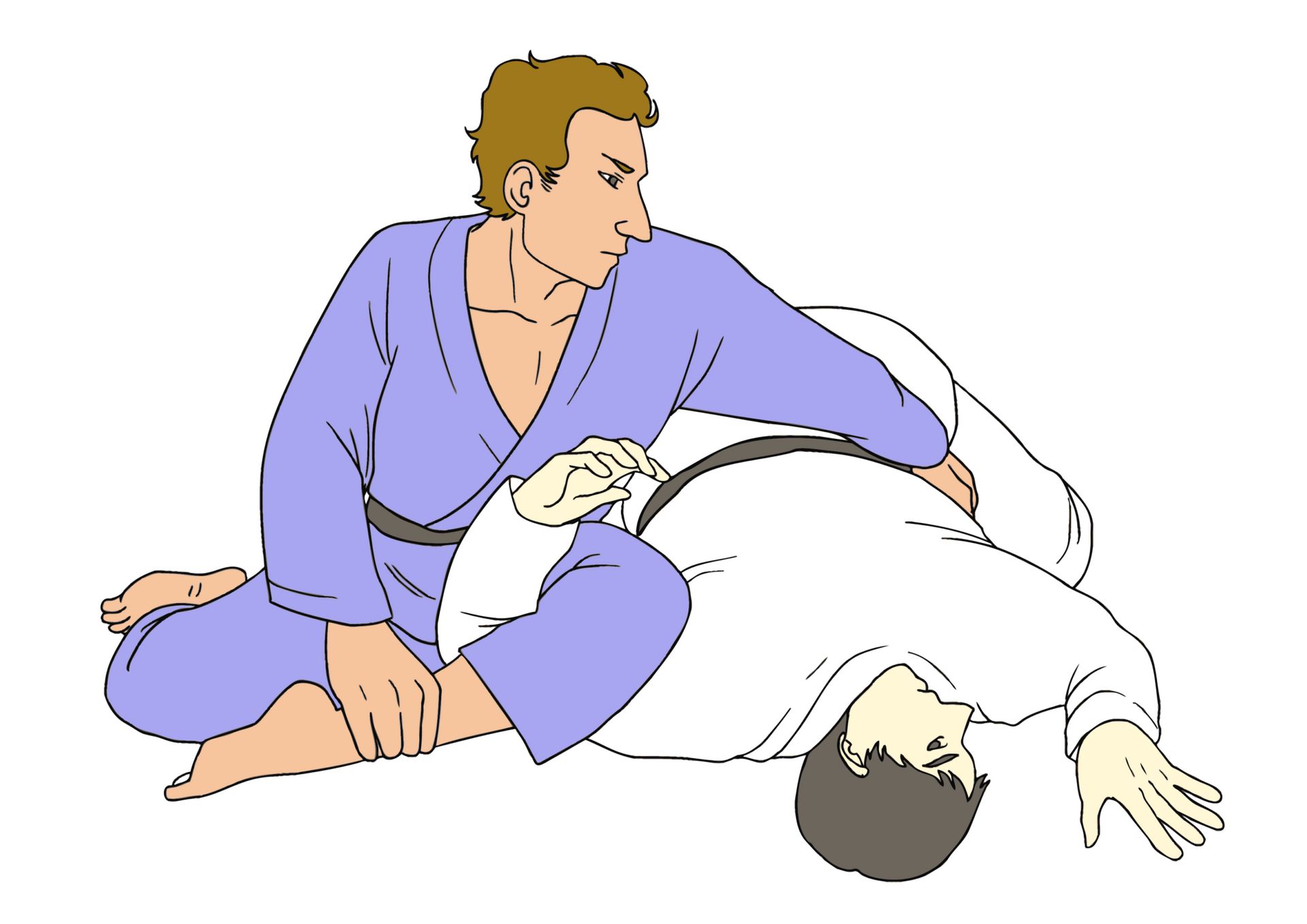
This let me explain to Eric that a) he needed to breathe, and b) he could start to defend himself and build frames and get to his side to get out. In doing this, I uncovered his fear that framing would expose him to a gift wrap, so I showed him how to avoid that.
I seriously believe that this part was infinitely more valuable for him than the omoplata could possibly have been. The odds of you hitting an omoplata if you can never get out of mount are incredibly low.
Not getting submitted and then learning to escape is critical when you're starting jiu jitsu and is basically a pre requisite to hitting submissions at any meaningful frequency, but it's so much less cool looking than hitting submissions. I really think this is the same as startups: not going out of business is far more important in most cases than parabolic growth; the latter only comes if the former stays true.
But, you sound smarter and feel cooler if you talk about crushing revenue targets and dislocating shoulders than you do about not going out of business and not getting tapped.
*The more you train something like Jiu Jitsu, the easier it becomes to find the path of least resistance and identify where someone is weakest
[The Bad Doctor]
All of this talk of bad advice, I'd be remiss to not bring up the more insidious side of advice: the misaligned incentive structure.
Yes, sometimes the people who give you advice actually benefit from you being in a worse position. This is where we cross into the "unethical" territory:
A Partner (business or romantic) who convinces you you are not doing enough to make something work, causing you duress and anxiety; as your partner, they benefit from the gain of your superhuman efforts to grow your business or emotionally regulate them, while you deal with the cost and torment of doing so (no posts for this example, but perhaps one day)
Again, this falls into a category beyond the pale of 'bad advice': this is sometimes unethical, sometimes abusive, and always to be avoided.
[Blood Drenched Advice]
Okay, so we know that sometimes advice serves the advice giver's ego more than it is actually serves the learner. We also know that sometimes, people who give advice are actually trying to take advantage of you.
So what's left?
Really, I think it's just the blood drenched advice: the advice from the people who actually DID the thing you're trying to do.
It makes a lot more sense to take advice about scaling to $1M ARR from someone who scaled to $1M ARR than from someone who scaled to $10K ARR.
While every situation is way different, the person who scaled to $1M ARR is much more likely to have seen and overcome the challenges that you will see and have to overcome to get there. Maybe the person who scaled to $10K ARR thinks they've seen those challenges or read a book on them or was told about them, but the value of information decays as you play telephone with it and pass it from one person to the next.
In the same vein, I value the opinions of my mentors who have scaled technology infrastructure far more than I’d value the opinion of a professor who read about it in theory!
To compound the issue, it's much easier to find someone who scaled to $10K ARR than it is to find someone who scaled to $1M ARR. So, as you continue to pass more and more thresholds, the number of people who can give you advice from their first hand experience continues to decrease!
And, interestingly enough, I'm finding that the more thresholds I pass, the less inclined I am to run around giving advice about things. I think that’s true of a lot of people who keep crossing thresholds. Looking back, I think it's very likely that I’ve given bad advice about things I didn't understand through experience a number of times! That doesn’t mean I don’t give advice, I’m just a lot more cautious about it now.
To compound the issue in startups in particular, there are quite a few chronic liars. Like anyone can talk about submissions in jiu jitsu, anyone can talk about scaling in startups. In either case, not everyone can do it. And, like the fundamentals are what most people need to hear about in Jiu Jitsu (not getting choked every 60 seconds), the fundamentals are what most people need to hear about in startups (not going out of business while you're trying to make a product that people want).
The difference between jiu jitsu and startups is that in jiu jitsu, I can very quickly figure out if you're bullshiting by rolling with you, but with startups, it's not as easy to immediately tell if someone is lying.
And, in startups, lying and stretching the truth is more common than you think... it warrants an entire post, really. Now, I don't know if it's more common than in something like consulting or fishing, but I do know that it is very common nonetheless!
If you don’t want to miss my journey & maybe what I have to say about founders and lying, subscribe—I’m here every week!
[20 Questions]
So, should we all just stop giving advice and put our heads in the sand?
From what I've seen from people ahead of me, no. It seems like the safest and most helpful way to give advice is to ask a lot of questions, especially the questions that the person might not be asking themselves. In this way, you can be more of a sounding board and help someone verbalize the challenges and struggles they're dealing with.
I actually think this way, you can get advice from someone who knows even less about a particular thing than you!
But at that point though, you might call it talking to a friend more than you'd call it getting advice.
Live Deeply,
